

Vet visits … hissssssssss. It’s no secret. Carriers, cars, and cats aren’t typically friends. Many people start prepping the week of and planning ahead. You’ve tried everything. Maybe if I …
… get the carrier out the night before.
… don’t get the carrier out until I have to trap him.
… put treats in the carrier.
… sneak attack and he’ll never see it coming.
It’s a process, but it doesn’t have to be. I’ve worked with so many angry kitties and yes, there is a way to get the cat in the carrier AND take them for vet visits while minimizing stress for you and them.
Prep for Vet Visits: The Physical Cat Carrier
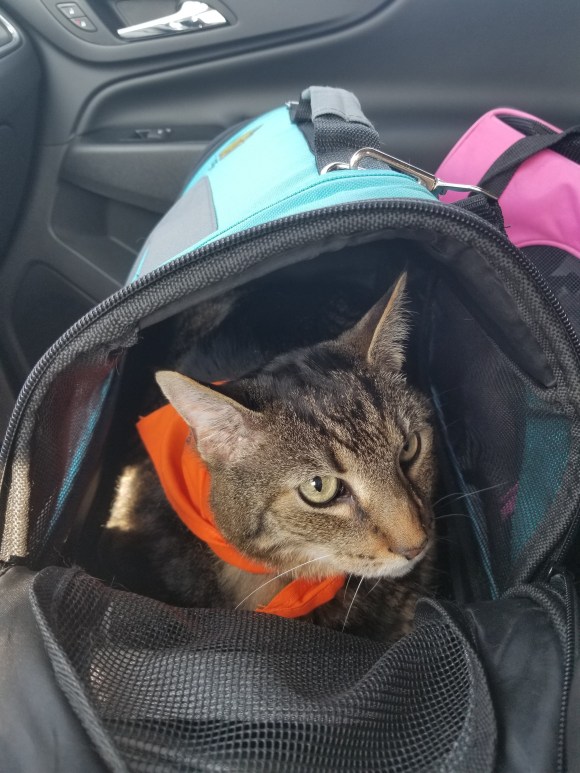
I recommend three things when it comes to the carrier:
- Get a soft carrier. I’ve had cats injure themselves on carriers with metal doors, AND I’ve had cats bite holes in the cardboard carriers. You’ll also have more control over how much you open a carrier if it’s soft because because it has zippers instead of an actual door.
- Add a blanket or towel into the carrier. Scent is HUGE for cats. Something that smells like them is calming and comforting. Grab a towel or small blanket your cat has laid on and put it in the carrier. You could also give your cat an old dish towel or T-shirt the day before transportation day; place the towel in her bed or favorite spot and have her lay on it to get a fresh scent. If you can’t do that, something that smells LIKE YOU is the next best thing (aka, something used, like a hand towel that needs to be washed anyway).
- Use calming spray before a vet visit. Many pheromone sprays mimic the same pheromones between a mother and kitten and have a calming effect. I recommend Feliway, but there are other calming, pheromone-related sprays you can spray on or in the carrier.
Time for the Vet: Get Your Cat into the Carrier
- Easy Peasy Cats – My resident cats are so easy, it isn’t fair. The opening is face up, I pick up my cat, put him/her in, and quickly zip it closed. Let’s be honest, very few cats are like that, and most of the time, it’s like squeezing a rabid tiger into your purse.
- Sneaky, Aggressive Cats – For more challenging cats, it’s honestly okay to take them to a small room, corner them, and put the opened carrier down in front of them. Not all cats will go in, but MANY will, especially when they don’t have an option to go somewhere else. A tiny bathroom is the best place to try this method. You can also cover the cage to make it more enticing.
- Nervous Cats – Do not be nervous, dramatic, or rigid. Your cat knows. And if you’re a stressed blob, there is no way you’ll get them into the carrier. Stay calm and move quickly. If you are already nervous or scared to put her in the carrier before you even try, I guarantee you won’t get her in the carrier. Calm and confident is the best way to go.
Time for a Vet Visit: The Car Ride
- You NEED to stay calm. Your cat feels your anxiety. Don’t make her anxiety worse by adding yours to the mix. Get your head right before you get in the car.
- Play classical or meditation music. The sounds and vibrations will relax your kitty. Trust me on this. Even if you don’t like it, you need to do what’s best for your pet. Calm music only. Your car should feel like a spa.
- Cover the carrier. Covered carriers help cats stay calm. At first, they’ll probably cry and make a fuss, but eventually, they usually calm down. It is safest for everyone if your cat stays in a carrier when en route.
- Buckle the carrier. Treat the carrier like you would a person. Buckle the kitty in to limit movement, and keep them as safe as possible in case you get into an accident.
SAFETY FIRST
Animals can be unpredictable and even get startled by trucks and other noises during a drive. I know of someone whose kitten jumped on her and caused an accident, and she (the woman) was horribly injured. Please be smart. SAFETY FIRST.
Positive Reinforcement
While at the vet, try to do as much celebratory activity as possible – treats, kisses, chin scratches – whatever it takes. Then, when you arrive home, give your cat tons of treats, pets, and attention. This type of positive reinforcement will help make the experience less scary for them over time.
Annual Vet Visits Are a Must
If vet visits are simply too stressful, here are some other options:
- Find a mobile vet in your area who will come to your house to perform the exam and administer vaccinations.
- Ask your vet for a little gabapentin, a calming med. Administer 2-3 hours before you leave, and your cat should be more relaxed.
Annual vet visits are important to monitor your pet’s health. Don’t forget to always pet and brush your cat and clean their eyes and ears. This way, you can keep an eye out for bumps, growths, mites, fleas, skin conditions, etc.
It’s really important to monitor vaccine injection sites. Why? It’s rare, but some cats develop cancerous tumors there. Read all about it in this post.

One reply on “How to Destress Your Cat for Vet Visits”
[…] For more insights on calming techniques, we can explore how to keep a cat calm in a carrier. […]