

Conjunctivitis in cats is the most common eye issue. Most cats experience it at least once in their lives. Let’s take a look at what conjunctivitis is, symptoms, causes, and treatment options.
What Is Conjunctivitis in Cats?

The conjunctiva is a mucus membrane and in cats it covers the white part of the eye, the upper and lower lids, and the third eyelid. Conjunctivitis is when the conjunctiva are inflamed and the eye turns red and swollen. In severe cases, the third eyelid, which is mostly not visible, also becomes swollen and can sometimes cover part or most of the eye. Conjunctivitis is an acute (sudden) condition that can affect one or both eyes. Because conjunctivitis is painful, it’s important to seek treatment for your cat.
Symptoms of Conjunctivitis

- Redness and swelling
- Tearing and watering
- Discharge or mucous – cloudy, yellow or green
- Partially or completely closed eye
- Excessive squinting or blinking
- Itchiness and rubbing of the eye
- Hair loss around the eye (usually from rubbing)
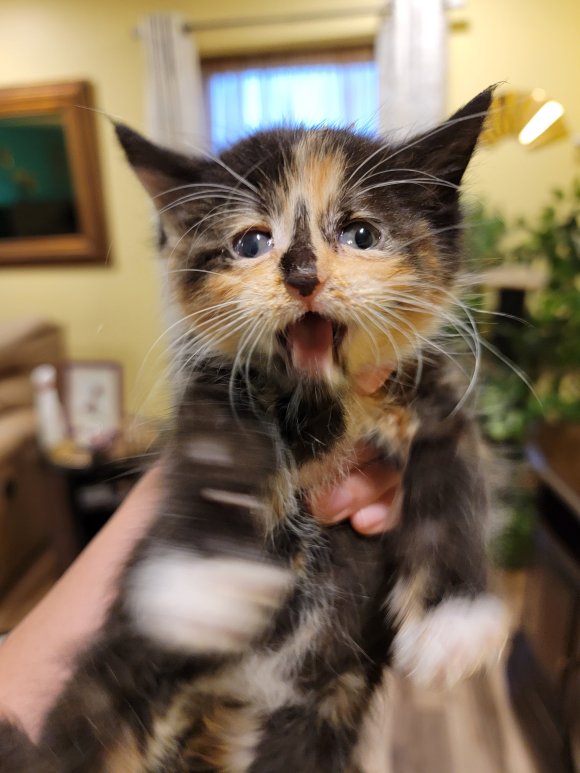
- Cloudiness of eye – This is not directly from conjunctivitis, but from a condition called keratitis. In keratitis, the cornea becomes inflamed, causing a cloudy look on the surface of the eye. I wanted to mention it here because I’ve seen both the actual symptoms of conjunctivitis and keratitis in kittens with the herpes virus. In this case, it’s considered eosinophilic keratitis.

Causes of Conjunctivitis
The most common causes for conjunctivitis are viral:
- Feline herpes virus aka a kitty cold
- Calicivirus
However, even if it starts as viral, many of these cats develop a secondary bacterial infection.
Outdoor cats may develop conjunctivitis secondary to a parasitic infection, although it’s rare.
Less common reasons include:
- Allergies
- Physical or chemical irritants (grass, smoke, etc.)
- Ulcers
- Glaucoma
- Tumors
- Cancer
Diagnosing Conjunctivitis
Most vets diagnose conjunctivitis in cats through an eye exam. Your vet will also likely test your cat’s tear production, and they may even stain the eye to look for a scratch or ulcer. It’s also not uncommon to perform a culture to see what type of cells are present on the eye.
Treatment for Conjunctivitis in Cats
Since conjunctivitis is often caused by the herpes virus, sometimes there is no treatment other than letting the virus run its course. However, to help the body fight the virus, your vet may prescribe the oral antiviral famciclovir. If a bacterial infection is suspected, generally the oral antibiotics Clavamox (amoxicillin) or doxycycline are prescribed. To specifically treat infections in the eye, the most common options are:
Certainly, there are many other eye medications to treat conjunctivitis. I’m highlighting what’s most common.
Sources:
Barnes, C., Hunter, T., and Ward, E., Conjunctivitis in Cats, VCA Animal Hospitals.
PetMD Editorial, Corneal Inflammation (Nonulcerative Keratitis) in Cats, PetMD.
Schaible, L., Conjunctivitis in Cats (Cat Pink Eye), PetMD.
